OBPRP News December 2024
Orange-bellied Parrot (OBP) Recovery Program News.
Prepared by Kerri Duncan, OBP Recovery Program Coordinator (ZAA), on behalf of the OBP Recovery Team.
MELALEUCA RETURNS
The OBP Recovery Team is celebrating yet another year of increased return numbers to the Melaleuca
breeding site in south-western Tasmania.
A total number of 92 returned OBPs were confirmed as of the census date on 15 December 2024. This is
10 more than last year’s count, making it the greatest number of returnees for the past 17 years.
The Department of Natural Resources and Environment Tasmania (NRE Tas) staff and volunteers
recorded 37 females and 55 males within the monitoring area, made up of 64 wild-born and 28 captive-
bred released birds. More returnees may be confirmed in coming weeks; if this occurs, the population
size will be updated at the end of the breeding season.
This year’s total returns number follows the gradual but consistent upwards trend we’ve seen over the
past six years:
DEC 2019 DEC 2020 DEC 2021 DEC 2022 DEC 2023 DEC 2024
23 51 70 77 82 92
In December 2016, only 17 OBPs returned to Melaleuca, four of which were female. A huge team effort
underpinned by the release of captive-bred birds has rescued the wild population from extinction. The
positive trend continues to inspire ongoing action towards the Recovery Plan 20-year objective: a wild
population of the Orange-bellied Parrot that, with limited species-specific management, has a high
likelihood of persistence in nature for 100 years.
MAINLAND SIGHTINGS
Among this year’s returnees were 15 birds that were spotted on the mainland during non-breeding
season surveys, including 13 recorded in Victoria and two in South Australia. The South Australian birds
were spotted on the Narrung Peninsula of the Coorong region, while the Victorian birds were made up
of nine seen at the Western Treatment Plant and four at Lake Connewarre.
SPRING RELEASES
NRE Tas released 15 captive-bred adults at Melaleuca across two spring release events to supplement
the number of wild breeding pairs. Captive-bred birds were transferred from the NRE Tas Five Mile
Page 1 of 4Beach, Healesville Sanctuary and Priam Psittaculture Centre facilities. Eight birds (five females and three
males) survived the two-week post-release period, bringing the total number of confirmed OBPs at
Melaleuca to 107 as of 15 December 2024.
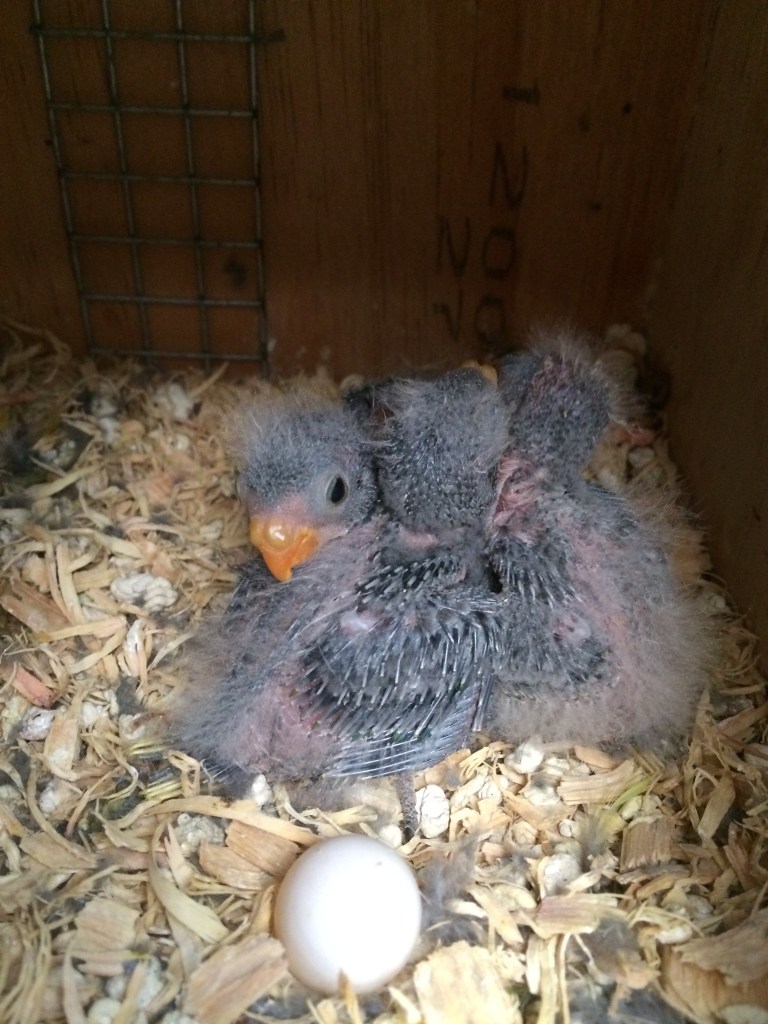
CAPTIVE BREEDING
Captive breeding at the five participating institutions (NRE Tas’s Five Mile Beach, Zoos Victoria’s
Healesville Sanctuary, Moonlit Sanctuary Wildlife Conservation Park, Priam Psittaculture Centre and
Zoos SA’s Adelaide Zoo) is well underway, with the first recorded nestling hatching on 12 November.
Fledglings will begin emerging from nests before the end of the year.
MIGRATION TRACKING PROJECT
NRE Tas has released a report outlining the results of the 2024 Migration Tracking Project. Delivered in
collaboration with Zoos Victoria, the Project involved the attachment of 46 VHF transmitters to Orange-
bellied Parrots, and the deployment of 20 VHF receivers along their migration flyway on the west and
north coasts of Tasmania. Full details can be found in the report on the NRE Tas Orange-bellied Parrot
Tasmanian Program website. The Migration Tracking Project will continue in 2025, with plans for
another 50 birds to be tagged prior to their migration.
BIRD FLU PREPAREDNESS
The captive institutions have also been busy developing their site-specific HPAI H5N1 2.3.4.4b
preparedness plans. Work continues behind the scenes across multiple jurisdictions to reduce the risk of
a possible HPAI outbreak for both wild and captive OBPs. A HPAI preparedness plan has been developed
for the wild population.
The current advice is to continue reporting sick or dead wildlife suspected of avian influenza to the 24-
hour Emergency Animal Disease Hotline on 1800 675 888.
Further information on how to recognise and respond to HPAI is listed in the following Wildlife Health
Australia (WHA) document: HPAI Advice for people who encounter sick or dead wild birds.
NEXT STEPS
NRE Tas staff and volunteers will continue to monitor and manage the wild population over the holiday
season, while captive facilities provide unfaltering care to the OBPs in breeding, holding and flight
aviaries across the country. NRE Tas will soon commence wild nest checks, and captive facilities will
begin preparing their juveniles for releases at Melaleuca from February 2025 to bolster the migrating
flock.
Image: Volunteers who participated in the OBP surveys around Arthur River in northwest
Tasmania on the weekend of 28-29 September 2024. Image by Lotte Kronburg.
Fast Facts:
OBPs (Neophema chrysogaster) are small parrots that primarily feed on seeds on the ground or low
vegetation. Males are bright green, yellow, and blue with a prominent orange belly. The colours of
females and juveniles are subdued and they have less prominent orange bellies.
In the summer, OBPs breed in southwestern Tasmania within 5 km of the coast. In autumn and spring,
they migrate via western Tasmania, the Hunter Island Group, and King Island. OBPs winter in coastal
habitats in southeastern Australia. Each year, OBPs migrate at least 600 km over land and sea.
The IUCN Red List and the Australian EPBC Act 1999 classify the OBP as Critically Endangered. The
species persists as a tiny wild population, breeding at a single location, after a recent rapid decline.
Many threatening factors have contributed to the decline of the OBP in the wild. Habitat loss and
degradation plus introduced predators and competitors likely drove past declines. Today, several
interacting threats impact the ongoing survival of wild OBPs, including ongoing habitat degradation,
reduced genetic diversity, disease, stochastic environmental events, climate change, and barriers to migration.
The Recovery Team comprises 28 government, non-government, and community group
representatives. It develops, coordinates, and reviews the OBP Recovery Plan, and preserves expertise
and advice in OBP biology, ecology, and conservation.
Volunteers greatly contribute to the actions of the OBP Recovery Program. They assist by collecting
data on OBPs in the field and captive institutions. They also raise public awareness and funds for
recovery actions.
The organisations within the Recovery Team fund recovery actions. Government and non-government
grants, and individual and corporate donations, provide additional financial support.